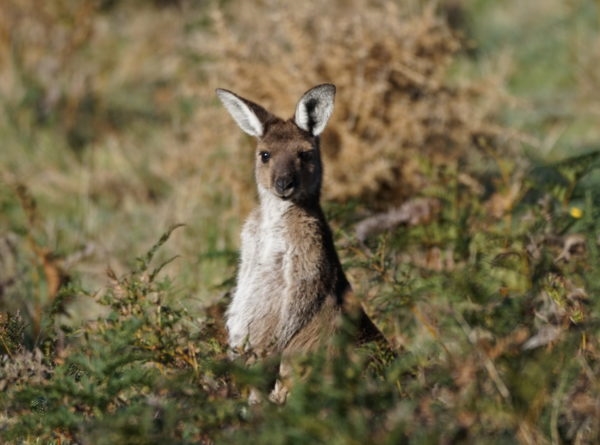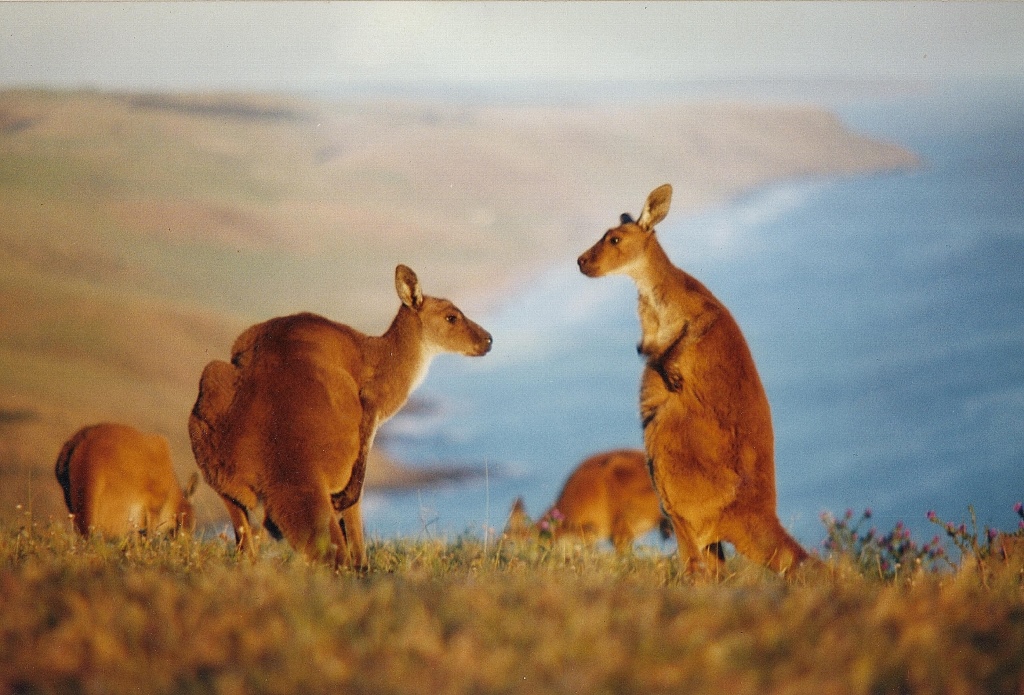
While there are few guarantees in life one thing we can assure guests with complete confidence is that they will see plenty of western grey kangaroos in their natural habitat. This species of kangaroo (Macropus fuliginosus) is found across almost the entire Southern part of the continent from coastal Western Australian, South Australian, Western Victoria up to Southern Queensland.
It exhibits sexual dimorphism, whereby males are larger than females. Muscle mass makes up approximately 80% of the body weight for this species.
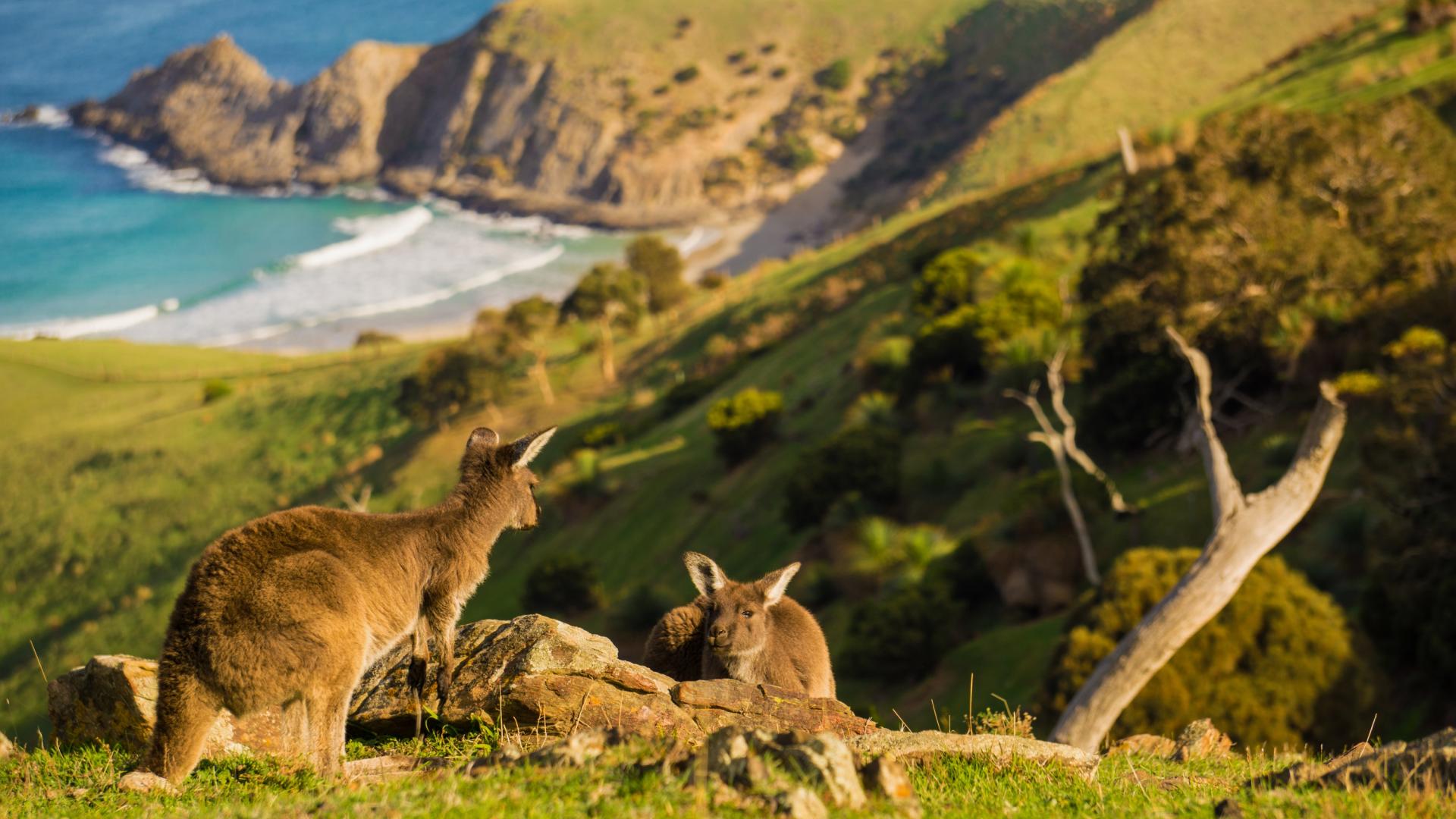
A fully grown male can weigh up to 54 kg, leap close to 12m in a single hop and reach speeds of up to 60kph. They feed mainly on grasses but can also be found foraging amongst leafy shrubs using their forearms to reach higher foliage. Males compete for dominance of the social groups, with the strongest male becoming the head of a mob. A dominant male kangaroo resides with the mob when females are fertile but separates from the mob in winter when breeding females are unlikely to come into oestrus. During breeding, young males may form single-sex groups that exist separately from the mobs. Mature males may form loose associations with other males which are not long lasting and vary from year to year. Western grey kangaroos may have home ranges that are as large as 550ha.
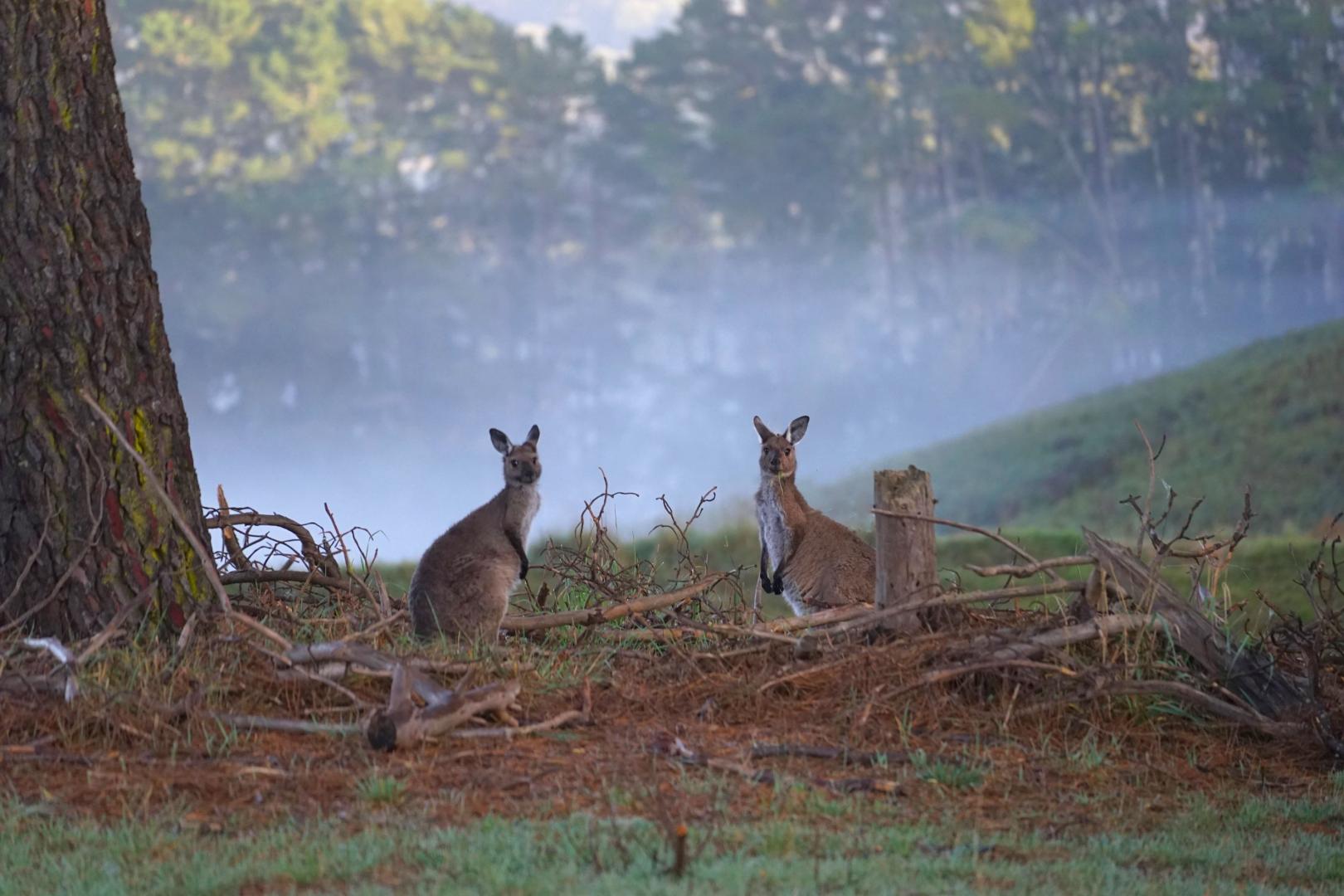
Gestation is typically 30-31 days after which the incomplete foetus resembling a jelly bean crawls to the teat in the pouch. Here it suckles for a further 130-150 days. Joeys leave the pouch after about 9 months but continue to suckle for a further 9 months.
Western grey kangaroos have lived to be upward of 20 years old in captivity. However, the maximum lifespan of these kangaroos in the wild is approximately 10 years.